

Published by Snippetx Media
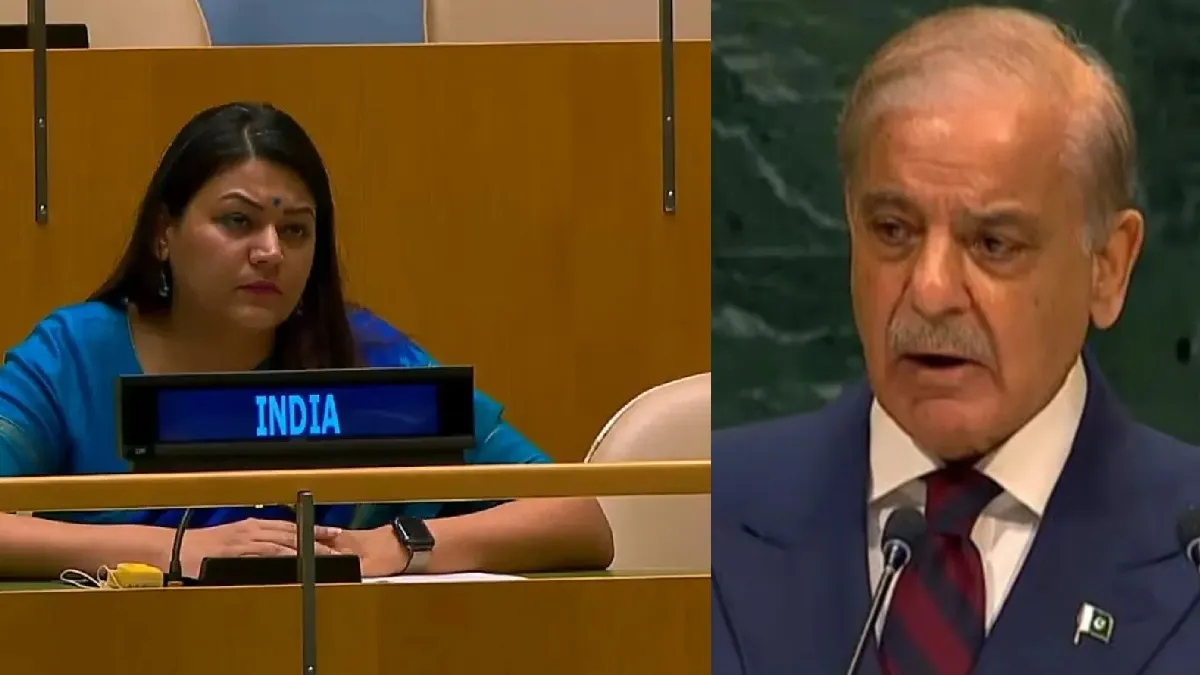
India hit back at Pakistan at the United Nations General Assembly, rejecting allegations raised by Pakistan Prime Minister Shehbaz Sharif and warning that terrorism would have consequences.
The diplomatic exchange took place after Sharif addressed the UN General Assembly and spoke about Pakistan’s position on issues concerning India and the wider region. India responded through its representative at the United Nations, strongly disputing the claims made by the Pakistani side.
India’s response focused heavily on terrorism, with New Delhi accusing Pakistan of presenting what it described as a misleading narrative at an international forum. India reiterated that terrorism remains a serious concern for regional and international security.
The Indian representative also emphasised that countries should not allow their territory to be used for terrorist activities and said that those supporting or facilitating terrorism should face consequences.
The exchange between the two countries comes amid continuing tensions in India-Pakistan relations. Terrorism, security and the long-standing dispute over Jammu and Kashmir remain major points of disagreement between New Delhi and Islamabad.
India rejects Pakistan's allegations
India rejected the allegations made by Pakistan and said that Islamabad’s statements did not reflect the situation on the ground.
New Delhi has consistently maintained at international forums that terrorism is one of the major challenges facing the region. Indian officials have also repeatedly called for international cooperation against terrorist organisations and those who provide them support.
The latest response at the UN General Assembly follows the established diplomatic practice of countries exercising their right of reply when they believe statements made by another country require a response.
Pakistan raises its concerns at UN
Pakistan has continued to raise its concerns about India at international forums, particularly in relation to Jammu and Kashmir and other bilateral issues.
Islamabad’s position on these matters differs significantly from India’s. India rejects Pakistan’s claims regarding Jammu and Kashmir and maintains that the issue should be viewed in the context of its own territorial and constitutional position.
The competing statements at the United Nations once again highlighted the sharp differences between the two neighbouring countries.
Terrorism remains a key issue
Terrorism was a central element of India’s response.
New Delhi has repeatedly stated that the international community should adopt a consistent approach towards terrorism and that no distinction should be made between terrorist organisations based on political considerations.
India’s latest remarks at the UN reiterated its position that countries must take action against terrorist groups and prevent their territory from being used to plan or support attacks.
The Indian side’s warning that terrorism would have consequences comes against the backdrop of years of tensions between India and Pakistan over security and cross-border terrorism.
India-Pakistan tensions at international forums
India and Pakistan have a long history of diplomatic and political disagreements. Their relationship has been shaped by disputes over Jammu and Kashmir, security concerns and allegations related to terrorism.
Both countries regularly present their respective positions at international forums, including the United Nations.
The latest exchange demonstrates that the differences between New Delhi and Islamabad continue to extend beyond bilateral discussions and remain part of wider diplomatic engagements.
The United Nations General Assembly provides an important platform for countries to present their positions on international and regional issues. Statements made during high-level debates can also prompt responses from countries that believe they have been directly criticised or referenced.
UN exchange draws attention to regional security
The latest India-Pakistan exchange has placed regional security and terrorism back in focus during the UN General Assembly proceedings.
India’s response underlined its long-standing demand for stronger international action against terrorism, while Pakistan continues to present its own concerns regarding India and Jammu and Kashmir.
The two countries remain divided on several major issues, and their competing positions at the United Nations reflect the broader diplomatic tensions between them.
For India, terrorism remains a key component of its foreign-policy messaging, particularly in discussions involving Pakistan. New Delhi has consistently argued that lasting regional peace requires action against terrorism and accountability for those responsible for supporting terrorist activities.
The latest statements at the United Nations are therefore likely to remain part of the broader diplomatic discourse surrounding India-Pakistan relations.