

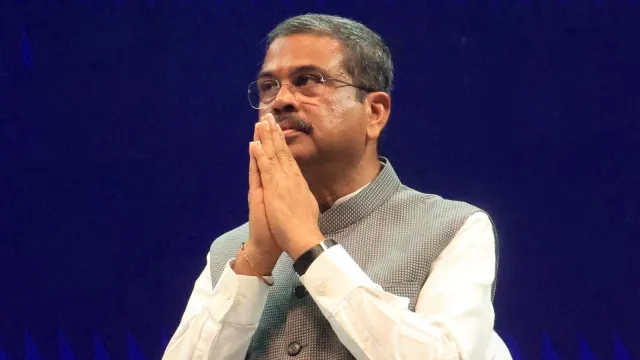
A Major Political Shift Ahead of Key Reforms
Published by Snippetx Media
In a significant development in Indian politics, Dharmendra Pradhan has resigned as the Union Minister for Education, bringing an end to a tenure marked by ambitious reforms, the implementation of the National Education Policy (NEP) 2020, and efforts to modernize India’s education system. The resignation has sparked widespread discussions across political circles, educational institutions, and social media, with many questioning what lies ahead for one of the country’s most important ministries.
While the central government is expected to announce a successor soon, the resignation has already become one of the most discussed political stories of the day. The transition comes at a time when several major educational initiatives are still in progress, making the leadership change particularly significant.A Tenure Focused on Educational Transformation
Dharmendra Pradhan assumed charge of the Ministry of Education during a period when India’s education sector was undergoing rapid transformation. One of his key responsibilities was overseeing the implementation of the National Education Policy (NEP) 2020, a framework designed to reshape school and higher education across the country.
During his tenure, several initiatives were introduced to improve digital learning, skill development, research opportunities, and collaboration between educational institutions and industries. The ministry also emphasized multilingual education, technology-driven classrooms, and greater flexibility in higher education programs.
His leadership coincided with the post-pandemic recovery phase, where educational institutions faced the challenge of balancing traditional classroom teaching with digital learning platforms.Why the Resignation Matters
The resignation arrives at a crucial stage for India’s education sector. Several large-scale projects under the Ministry of Education remain in various stages of implementation, including curriculum reforms, digital education initiatives, teacher training programs, and higher education modernization.
Political analysts believe the leadership change could influence the pace and direction of ongoing reforms. While some experts expect policy continuity regardless of the ministerial change, others believe a new minister may introduce fresh priorities or administrative approaches.
The government has not yet provided detailed reasons behind the resignation, leading to widespread speculation among political observers. Official clarification is expected once the cabinet announces the next appointment.Reactions from Political Leaders and Educators
The announcement has generated mixed reactions across the political spectrum.
Supporters have highlighted Dharmendra Pradhan’s contribution to implementing long-term educational reforms and promoting innovation within the sector. Many educators have acknowledged his role in expanding digital learning infrastructure and encouraging institutional reforms.
Opposition leaders, meanwhile, have renewed discussions on the implementation challenges faced by several educational policies and called for greater consultation with students, teachers, and state governments.
Educational institutions are closely monitoring developments, as future policy decisions could affect admissions, curriculum design, research funding, and skill-based education initiatives.Impact on Students and Educational Institutions
For students and parents, the immediate impact is expected to be minimal. Existing academic schedules, examinations, admissions, and university operations are likely to continue without interruption.
However, policy-level decisions related to higher education, entrance examinations, funding allocations, and future reforms may depend on the priorities of the incoming Education Minister.
Universities, colleges, and schools across the country are expected to continue implementing existing government guidelines until any new directives are issued.What Happens Next?
The Prime Minister is expected to recommend a new Education Minister as part of the Union Cabinet’s administrative process. Until then, ministry officials will continue overseeing ongoing projects and day-to-day operations.
The appointment of the next minister will be closely watched, especially by students, teachers, universities, education startups, and policymakers. The new leadership will inherit several important responsibilities, including expanding access to quality education, strengthening research, improving employability, and ensuring the effective rollout of ongoing reforms.
India’s education system is at a pivotal stage, with increasing emphasis on digital transformation, vocational training, global competitiveness, and innovation. The leadership transition offers both challenges and opportunities.
Whether the new Education Minister chooses to continue existing reforms or introduce fresh initiatives, the coming months will play an important role in shaping the future of education for millions of students across the country.
For now, Dharmendra Pradhan’s resignation marks the conclusion of a significant chapter in India’s education policy journey, while opening the door to a new phase of leadership and decision-making.
The resignation of Dharmendra Pradhan as India’s Education Minister represents an important political development with implications for the country’s education landscape. Although day-to-day academic activities are expected to continue uninterrupted, the appointment of a new minister will be closely observed by students, educators, and policymakers alike. As the government prepares for the transition, attention will remain focused on maintaining momentum in educational reforms while addressing the evolving needs of India’s rapidly growing student population.
Stay updated with the latest verified political, education, and national news only on Snippetx Media.